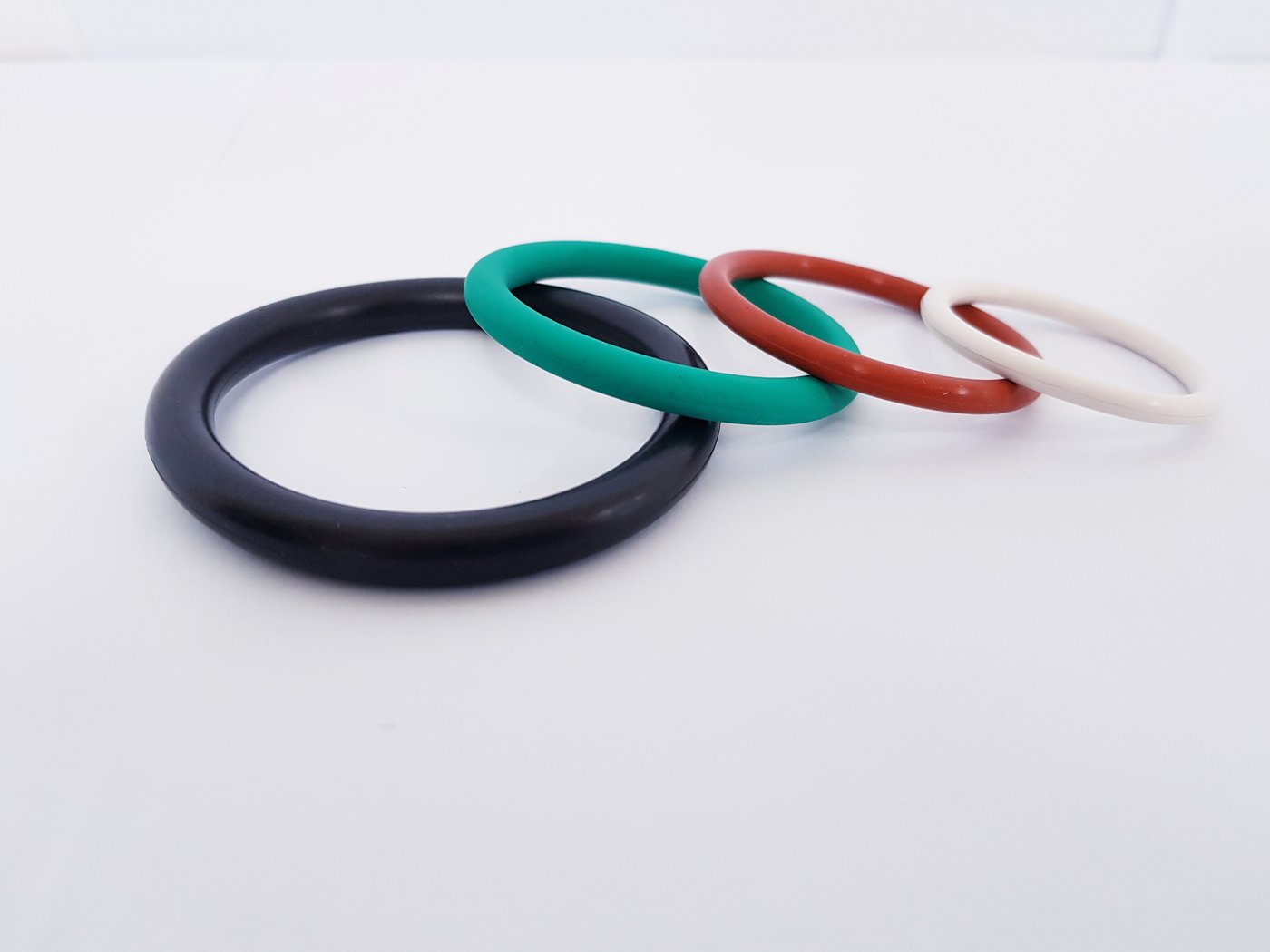
O-rings are used in a wide range of static and dynamic applications, and are the most widely used seal in terms of efficiency and cost.
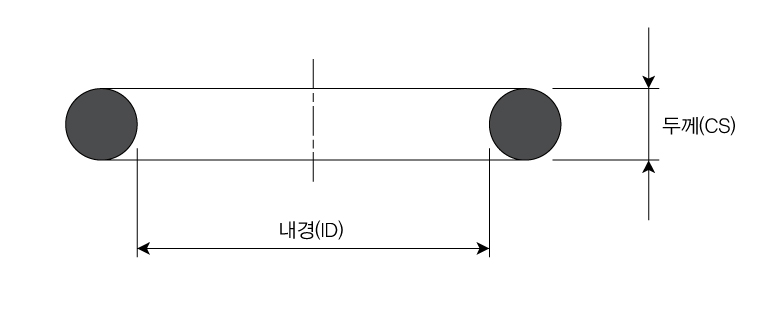
A ring with a round cross-section (cord) is compressed into a groove, where the O-ring's own elastic recovery force continuously presses against the contact surfaces to block the path of fluid or gas. Sealing force and service life stay consistent when the compression ratio (typically 15–30%) and groove dimensions are accurately controlled.
Simple shape that is easy to install and low-cost to produce.
Suitable for both static and dynamic sealing (fixed joints / reciprocating & rotary motion).
Back-up rings can be added under high pressure to prevent extrusion.
Supports international standards (AS568, JIS B2401, etc.) as well as custom sizes.
| Material | Application | General Reference Temp. Range |
|---|---|---|
| NBR (Nitrile-butadiene) | Oil resistance, abrasion resistance, hydraulic | approx. -30~+100°C |
| HNBR (Hydrogenated NBR) | Cold resistance, new refrigerants | approx. -30~+150°C |
| FKM (Fluorocarbon rubber) — representative brand: Viton®, etc. | Heat & chemical resistance | approx. -20~+200°C |
| EPDM (Ethylene-Propylenediene) | Water resistance, weathering, steam | approx. -45~+150°C |
| VMQ (Silicone) & FVMQ (Fluorosilicone) | Heat/cold resistance, food-grade | approx. -55~+200°C |
| CR (Chloroprene rubber) — representative brand: Neoprene™, etc. | Excellent weathering & ozone/heat aging resistance | -40~100°C |
| PU (Polyurethane) | Abrasion resistance, high pressure | approx. -30~+100°C depending on grade |
| ACM (Acrylic Rubber) | Reviewed for high-temperature oil and automotive lubricant conditions (moisture/low-temperature conditions confirmed separately) | Check by compound |
| PTFE = Teflon | Heat/chemical resistance, solid O-ring | Reviewed separately by structure and grade |
| FEPM (TFE/P) — representative brand: AFLAS®, etc. | Chemical resistance, steam | approx. -10~+230°C depending on grade |
| FFKM (Perfluoroelastomer) — representative brand: Kalrez®, etc. | Outstanding chemical & heat resistance | approx. -25~+330°C depending on compound |
| RGD/AED-resistant compounds | Individual HNBR/FKM/FFKM grades with relevant test data reviewed on a case-by-case basis | Check by grade |
| Low-temperature compounds | Confirmed separately against the required minimum temperature and the compound's low-temperature test data | Check by grade |
The temperatures above are general reference ranges by material family, not a warranted service range for any specific product. Actual usable temperature depends on the compound, contact fluid, pressure, exposure time, and static/dynamic conditions.



Viton® and Neoprene™ are trademarks of The Chemours Company, and Kalrez® is a trademark of DuPont. AFLAS® is a trademark of AGC Inc. These names are referenced for material identification and application review only; certification and test data for individual branded products are confirmed against the manufacturer's own documentation.